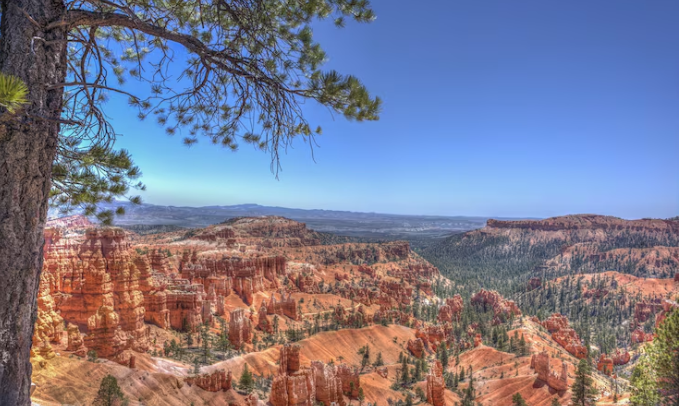
Forget Sedona – Arizona’s Most Breathtaking Landscape Is Two Hours Away and Still Completely Crowd-Free
I laughed when I was first informed that Sedona had a parking issue. Then, on a Saturday in March, I drove in and circled a trailhead lot that had been packed since dawn for forty minutes. On the hood of his rental Jeep, a man in hiking sandals was eating a granola bar while he waited for someone to get out. Yes, the red rocks were beautiful. They are always breathtaking. However, there was a flattening effect from the crowds, the kind that reduces wonder to logistics.
I then departed. drove north, then east, past Oak Creek Canyon’s long ribbon, and into an area of Arizona that most tourists seem to skip over on a map. Depending on how frequently you stop, it could take up to two hours. The country surrounding the Mogollon Rim and the less-traveled areas of the Coconino National Forest—a high-desert plateau rolling into pine forest with canyon overlooks that drop two thousand feet without a guardrail or a souvenir stand in sight—are the destination, if you want to call it that.
It’s difficult to ignore the silence at first. The quiet of the Rim seems almost suspicious after Sedona, where drone propellers and shutter clicks accompany every viewpoint. The only thing moving when you stop at a turnout and approach the edge is the wind blowing through ponderosa. Perhaps a raven. You are not satisfied with the landscape’s performance. I believe part of what makes it so disarming is that it simply sits there, ancient and somewhat apathetic.
People who live close to Payson or Strawberry seem to know exactly what they have and would prefer that you not write about it. When asked for a hiking recommendation, a Pine gas station employee grinned and suggested a location two hundred miles away. Alright. The Rim has been on maps for a century, so its allure isn’t that it’s hidden, but rather that it’s been overlooked. The marketing budget was taken up by Sedona. The bucket lists were absorbed by the Grand Canyon. The remainder has been left to remain as it is.
In some places, the geology is truly peculiar. Fossilized seabeds tilted upward at angles that suggest the earth wasn’t paying attention when it set them, sandstone giving way to limestone, and distant cinder cones. You can find overlooks where the entire Tonto Basin opens up beneath you, hazy blue and seemingly endless, if you drive the dirt roads off Forest Service 300. On the appropriate afternoon, it resembles a landscape painting from the 19th century, but you’re standing there by yourself.
Naturally, “crowd-free” is a relative term. Summertime weekends bring campers, and there are plenty of motorcycles on the Rim Road. On a Tuesday in May, however, you might still arrive at a trailhead and discover that your vehicle is the only one there. Go to Cathedral Rock and try that. Really, you can’t anymore.
The obvious infrastructure of a destination is what this location lacks. There is no boutique hotel with a carefully chosen mezcal program, no spa that offers vortex massages, and no Tlaquepaque equivalent. Sandwiches are what you bring. Around six o’clock in the evening, you watch the sun do amazing things to the cliffs, and then you drive back to your starting point with red dust on your shoes and a weird sense that you got away with something.
It remains to be seen if it continues in this manner. Arizona’s tourism industry is changing as a result of hot summers driving travelers to higher altitudes and social media’s inevitable discovery of previously undiscovered information. For now, though, the Rim is still Sedona as it was before the Whole Foods and Jeep tours. quieter. Unfamiliar. If you can tolerate a little inconvenience to get there, it might be better.


You May Also Like

Capitol Reef: Utah’s Sleeper-Hit National Park

America’s Airport Makeovers – The 9 U.S. Airports Completely Transformed in the Past Two Years
