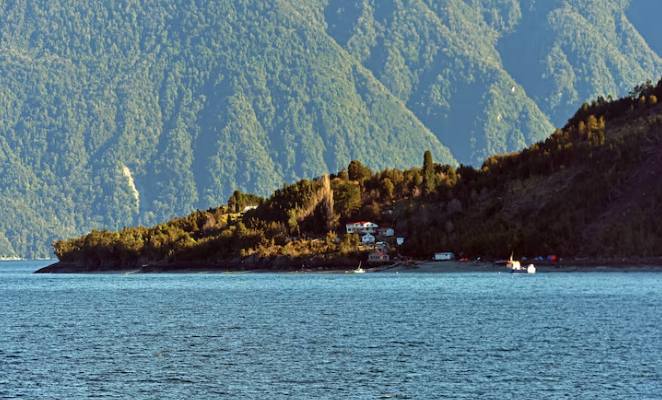
The San Juan Islands, Washington – America’s Most Stunning Archipelago and Still One of Its Best-Kept Secrets
By the time the seaplane lands off San Juan Island after a forty-minute flight from Seattle, the city you just left seems unreal. There is no space needle in the distance. There are no throngs of people pushing you to the next salmon stand at Pike Place. All you could hear was the gentle mechanical hum of the engine winding down, low green hills, and water. The speed at which the noise leaves your mind is difficult to ignore.
Depending on the tide and how generously you count, this archipelago contains about 400 islands, the majority of which are little more than rocks. The Washington State Ferries can reach four of them, while the others remain in the Salish Sea, largely unconcerned. The main island has a diameter of roughly twenty miles. No traffic lights can be found anywhere. It feels less like emptiness and more like a tiny, conscious rejection of the contemporary pace when you can drive for extended periods of time without passing another vehicle.
The majority of tourists arrive at Friday Harbor, a functional port with about 2,000 residents and a whale museum that, appropriately, takes itself seriously. In summer, especially around Orcas Island—which, despite its name, was named after a Mexican viceroy, not the local pods—boats going out to see orcas and humpbacks fill up quickly. The majority of the names that the Spanish explorer Francisco de Eliza gave out here in 1791 managed to endure despite attempts by American naval officers and British map editors to rebrand the area with varying degrees of success.
However, a pig is involved in the most bizarre historical event. A boar strayed into the potato patch of an American settler in 1859 after leaving a Hudson’s Bay Company farm. It was shot by the settler. The dispute between the two nations, which both claimed the islands, intensified until troops were positioned at opposing ends of San Juan. For twelve years, they remained there. And nothing took place. Formal gardens were constructed by the English. The Americans arrived to raise a glass to Queen Victoria. On Independence Day, the British were present. You couldn’t make up the fact that the entire standoff was ultimately turned over to Germany’s Kaiser Wilhelm I for arbitration. Even now, you can stroll around the grounds of both camps, and there’s a silence that almost seems to be an apology for how ridiculous the whole thing was.
The islands don’t seem to want much from you these days. There’s no well-kept resort strip, no theme park glitz. Kelp, driftwood, and the occasional fishing boat make up the shoreline, which is still operational. There are bald eagles everywhere, with the San Juans having the highest concentration in the lower 48. This may sound like a tourism board statistic until you see one sitting on a fence post, looking unimpressed. Winter is when trumpeter swans appear. Decades after being driven out by starlings, western bluebirds are gradually making a comeback.
There are a few cruise lines that stop here, such as American Cruise Lines and UnCruise, and it seems like the islands accept them rather than actively seek them out. The majority of visitors arrive independently, frequently as an extension of a trip to Seattle, and this is probably advantageous to all. There is not much infrastructure. There aren’t many people. Locals seem to have little tolerance for crowds.
The San Juans might not remain silent indefinitely. Travel to the Pacific Northwest has been increasing for years, and eventually word gets out. However, the archipelago still appears to run on its own schedule for the time being; it is slow, a little preoccupied, and occasionally interrupted by a passing pod of whales. You wonder why there aren’t more Americans who are aware of it. Then, on the flight back, somewhere over the water, you begin to hope they don’t.


You May Also Like

Exploring Utah and the Beauty of Not Planning a Trip

Fall Foliage on Fire, Part 2
