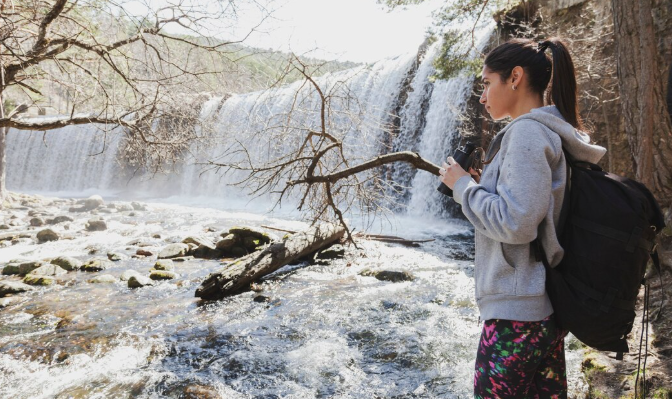
The Pacific Northwest Waterfall Trail That Rivals Iceland — And You’ve Probably Never Heard of It
The first time you walk into a section of forest about an hour south of Portland, you can see why people frequently compare it to a nation three thousand miles across the Atlantic. The forest smells like wet cedar and something older. Silver Falls State Park’s Trail of Ten Falls doesn’t make a big deal out of it. It is not required to. The water, in some way, speaks louder than the basalt walls.
Iceland has come to be used as a kind of abbreviation for a particular kind of scenery, such as dark volcanic rock, walkable water curtains, and that slightly otherworldly green that takes almost too good pictures. Strangely, most travelers—even those who consider themselves outdoorsy—draw a blank when you mention Silver Falls by name, despite the fact that Oregon has been subtly providing something similar for decades. Perhaps the park’s modest reputation is precisely what has prevented it from being overrun.
It may seem insignificant, but when you stand inside the rock alcove behind South Falls and watch a 177-foot sheet of water fall in front of your face, the eight-mile loop gains slightly more than a thousand feet. The trail actually allows you to walk behind the cascade, not from a distance or through a viewing window, but rather through a lengthy, dripping cave that has been sculpted by centuries of erosion. There, people become silent. It is audible to you. No camera can fully convey the feeling of being on the wrong side of a waterfall, so phones come out and then back in.
Walking around the area gives the impression that it hasn’t been overdesigned. The forest still seems to be in charge even though the path is well-maintained and the signage is sufficiently clear. The edges are crowded with ferns. Long curtains of moss hang from maples that seem to have existed before Oregon even existed. Locals will tell you that the trail is busiest on summer weekends, which is true, but if you go on a wet spring weekday, you might only see a few other hikers, most of whom are wearing waterproof shells that aren’t quite functional.
It’s not totally fair to compare either location to Iceland. With nothing to lessen the drama, Iceland’s waterfalls seem vulnerable against vast volcanic plains. In contrast, Silver Falls is nestled and nearly undetectable, with each cascade emerging gradually as the trail winds through the canyon. They’re both amazing. They simply have amazing vocabularies. Ten different waterfalls in a single loop, old-growth Douglas fir, and basalt amphitheaters are just a short drive from a major airport. This is what Oregon has, and it’s easy to underestimate.
Because Oregon has been concealing a tiny empire of basalt-column waterfalls, it is worth mentioning the other contenders. Nestled close to Scotts Mills, Abiqua Falls is a challenging drive and a rope-assisted scramble down a cliffside that deters casual tourists and rewards the tenacious with an almost flawless horseshoe amphitheater. Further south, Toketee Falls has those nearly man-made geometric columns. Another walk-behind opportunity can be found at Tamanawas, which is located on the east side of Mount Hood. Any of them would be the focus of a travel advertisement somewhere else.
It’s worth considering why none of this is more well-known. Geographical factors play a part in this; the Pacific Northwest is home to so many waterfalls that individual ones are overlooked in the inventory. Temperament may play a part. In my experience, Oregonians are not eager to promote the locations they adore. Iceland established a worldwide brand. A parking lot and a few wooden signs were constructed by Silver Falls. In the end, the water is performing the same function in both locations. The only expense is a plane ticket.

You May Also Like

Baton Rouge Food Tours

The Appalachian Mountain Town That Has More Michelin-Worthy Restaurants Than Some Major U.S. Cities
