What Scientists Now Say About How Travel Literally Slows Down the Aging Process
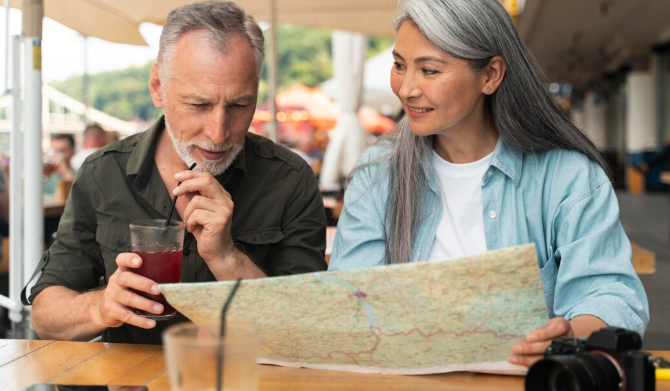
Some people always return from trips looking, in some way, better than when they left. rested in a way that cannot be explained by sleep alone. lighter. Something in the eyes. Most of us attribute it to unwinding, getting away from our daily routines, eating healthily at last, or taking more walks. It turns out that the explanation may go much deeper than that, possibly touching on the biology of how quickly we age.
The concept of entropy, a physics principle that describes the universe’s slow march toward disorder, has been applied to what occurs inside the human body during travel, according to a study published by researchers at Edith Cowan University in Australia. Positive travel experiences may actually slow the body’s biological aging by keeping its major systems in what scientists refer to as a “low-entropy state,” according to the argument made by PhD candidate Fangli Hu and her interdisciplinary team in the Journal of Travel Research. It sounds abstract until you realize that, in essence, what they’re saying is that travel keeps your body from breaking down.
| Key Information | Details |
|---|---|
| Study Title | The Principle of Entropy Increase: A Novel View of How Tourism Influences Human Health |
| Published In | Journal of Travel Research, 2024 |
| Lead Researcher | Fangli Hu, PhD Candidate |
| Institution | Edith Cowan University, Australia |
| Research Type | Interdisciplinary — entropy theory applied to tourism and health |
| Core Framework | Entropy theory (biological disorder and aging) |
| Key Finding | Positive travel experiences may slow premature aging by maintaining low-entropy states in the body |
| Systems Affected | Metabolic, immune, self-healing, and anti-wear-and-tear systems |
| Health Mechanisms | Stress reduction, physical activity, novel environments, social interaction |
| Reference Source | ScienceDaily Coverage |
| Potential Risks | Infectious diseases, injuries, food/water safety issues, over-tourism |
| DOI | 10.1177/00472875241269892 |
Four beneficial systems are identified by the study. In response to unfamiliar surroundings, the metabolic system, which controls how the body uses energy, increases activity in ways that seem to promote long-term health. In strange, stimulating environments, the immune system, which is frequently forced into chronic overactivation by everyday stress, appears to find a sort of recalibration. Then there is the body’s capacity for tissue repair, which the researchers refer to as the self-healing system, and the anti-wear-and-tear system, which prevents joints, muscles, and organs from deteriorating too soon. They propose that travel simultaneously pushes all four in a healthier direction. To be honest, it’s difficult not to find that amazing.
Travel-related physical activity, such as hiking coastal trails, exploring city streets for hours, or climbing to ruins without elevators, adds something that a gym session frequently cannot: meaningful movement within a setting. Walking through a Japanese forest is not the same as running on a treadmill. The researchers hypothesize that gap matters biologically, even though the body may not be able to tell them apart based on calorie counts. Hu points out that physical activity during travel can promote tissue regeneration by increasing metabolism, enhancing blood circulation, and speeding up nutrient transport.
The precise amount of travel required, the kinds of travel that have the greatest impact, and whether a weekend road trip is nearly as beneficial as a month overseas are still unknown. The study is theoretical in important ways; instead of following people over decades, it develops a framework. Since people who travel frequently typically have fewer chronic stressors in their daily lives, skeptics would rightly point out that the correlation between travel habits and health may reflect economic privilege as much as biology. Sitting with that variable is worthwhile.
However, this research seems to be pointing to something genuine. The study’s individual mechanisms—stress reduction, social interaction, nature exposure, and moderate exercise—are neither novel nor contentious. The idea that travel combines all of them in a way that may have an anti-aging effect greater than the sum of its parts is novel. In Hu’s own words, tourism is more than just recreation. It could be medicine working in the background, disguised as a holiday.
Regarding the dangers of travel, the researchers are equally forthright. The destination’s beauty doesn’t make infectious disease, accidents, strange food and water, or the physical strain of long travels go away. They observe that negative experiences cause entropy to move in the opposite direction. They use COVID-19 as an example, and it’s a sharp one. Travel can be dangerous due to the same openness that makes it enriching. Common sense, planning, and context are still important considerations.
After reading this research, you are left with the impression that aging is a process that you can slow, modulate, and possibly even negotiate with—not through costly interventions, but through experience itself. That seems like a truly distinct perspective on health. And perhaps the best excuse of all to finally plan the trip you’ve been putting off.


You May Also Like
Taos, New Mexico, Is Completely Underrated—And These Are the 10 Things Visitors Always Regret Missing

Fete Rouge- Celebrating Baton Rouge’s Culinary Greatness and Raising Money for Charity