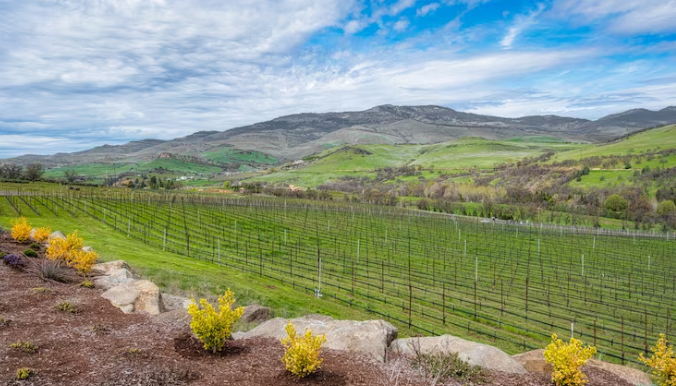
Forget Napa: Northern California’s Most Beautiful Wine Country Town Costs Half as Much and Has Better Views
When you drive into Healdsburg, the first thing you notice is how little it tries to accommodate you. There isn’t a neon-lit visitor center, a grand stone entrance, or a line of identical luxury SUVs waiting outside a tasting room. A few old water towers, a bakery that smells like butter at nine in the morning, a town plaza shaded by trees that have obviously been there longer than anyone drinking coffee underneath them, and a slow detour off the highway. It has a lived-in vibe. In today’s wine country of California, that is uncommon.
In contrast, Napa has been refined to resemble a theme park. Indeed, it is historically significant and beautiful, but it is increasingly designed for a specific type of visitor with a specific credit limit. Highway 29 can feel like a slow-moving parking lot lined with vineyards in the summer, and tastings there typically cost between forty and one hundred dollars per person, frequently by reservation only. Locals in the Bay Area feel that the magic has been diluted. It’s evident in the way they discuss their plans for the weekend. Nowadays, very few people mention Napa. Sonoma, they say. They say Healdsburg more precisely.
Healdsburg has a geographical advantage that is difficult to exaggerate because it is situated at the meeting point of three of the state’s most prestigious appellations: Russian River, Dry Creek, and Alexander Valley. You can travel from cool-climate Pinot Noir country to warmer, dustier Zinfandel hills and then to Cabernet land, which subtly competes with anything across the county line, in just fifteen minutes. In town, tasting fees typically range from $25 to $60, sometimes less if you happen upon a smaller, family-run establishment where the person pouring is also the one who picked the grapes. In Napa, those kinds of conversations are rare these days.
First-time visitors are most surprised by the town itself. You can park once and spend the entire day on foot. A few Michelin-starred restaurants, a great cheese shop, bookstores, and tasting rooms that resemble living rooms rather than retail establishments surround the central plaza. The last time I went through, a woman pouring a glass of Grenache almost casually mentioned that the vines were planted by her grandfather. It is difficult to ignore how frequently this type of detail appears here and how infrequently it does an hour to the east.
Then there are the opinions, which may be the most compelling argument in all honesty. Napa is renowned for its beauty, but it is also renowned for being flat in some areas due to its own prosperity. Healdsburg is situated nearer the Pacific, the redwoods, and the kind of undulating, foggy landscape that appears nearly surreal in the early morning. You’ll be under three-hundred-foot trees in Armstrong Redwoods if you drive twenty minutes west. You’ll be eating oysters in Bodega Bay in another thirty minutes. The majority of the work is done by the scenery. Planning is hardly necessary.
The story of lodging is similar. Although rates have been rising as word gets out, boutique inns and converted ranches in and around Healdsburg frequently charge thirty to forty percent less than comparable rooms in Yountville or St. Helena. This window of relative affordability may already be closing. There are more hotels being built. Some of the more well-known wineries have begun accepting reservations weeks in advance. It’s really unclear if Healdsburg will be able to maintain its somewhat dilapidated, friendly vibe as more people become aware of it.
For the time being, however, it continues to be the California wine country that most people envision before traveling there. quieter. Greener. Reasonably priced. Additionally, the plaza was almost embarrassingly beautiful on that particular afternoon when the light was shining sideways through the oak trees.


You May Also Like

Playing Tour Guide in Nashville (A Perfect Nashville Weekend)

Exploring Utah and the Beauty of Not Planning a Trip
