Taos, New Mexico, Is Completely Underrated—And These Are the 10 Things Visitors Always Regret Missing
On their way to Santa Fe, the majority of travelers pass through Taos and look at it from the highway like a postcard they don’t plan to keep. That is incorrect. An actual one. Taos is located in northern New Mexico at an elevation of almost 7,000 feet above sea level. It is surrounded by the Sangre de Cristo Mountains and has a gorge that is so deep and abrupt that it seems as though the earth has lost its temper. It’s the kind of place that requires several hours to comprehend and several days to truly grasp.
Taos Pueblo is the first thing that most tourists miss. They treat it like a photo stop, not because it’s difficult to find—it’s clearly marked. For over a millennium, the Pueblo has been a continuously inhabited Native American community. The current adobe structures, which appear essentially unchanged from when Spanish explorers arrived in 1540, are thought to have been built between 1000 and 1450 A.D. There are still people living there. There is a weight to the location that isn’t captured in pictures when you visit with a guide, which is something you should do. Oral history predates written records by a significant amount. Almost all visitors who hurry through without taking a tour regret it.
| Location | Taos, New Mexico, USA — Northern Rio Grande region, elevation ~6,969 ft |
| Population | Approx. 5,700 (town); ~32,000 (Taos County) |
| Founded | Officially incorporated 1934; inhabited for over 1,000 years |
| Nickname | The Soul of the Southwest |
| Known For | Taos Pueblo (UNESCO World Heritage Site), Rio Grande Gorge, Earthships, art galleries, Taos Ski Valley |
| Climate | High desert — mild summers, snowy winters, ~300 sunny days/year |
| Key Landmark | Rio Grande Gorge Bridge — 5th highest bridge in the US, 650 ft above the river |
| Official Tourism | Visitor info at New Mexico Magazine |
| UNESCO Status | Taos Pueblo designated World Heritage Site in 1992 |
| Best Time to Visit | Year-round; spring and fall for mild weather and fewer crowds |
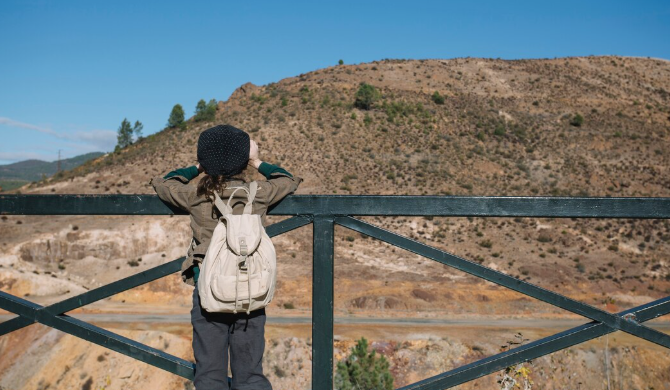
The Rio Grande Gorge Bridge, on the other hand, is treated like a roadside attraction by visitors who park, lean over the railing, snap a selfie, and then drive off. It’s unfortunate. The bridge is the fifth highest in the US, spanning 1,300 feet and rising 650 feet above the river below. Out and back, the rim trail is six miles long. Go at dusk. If you’re patient enough, you may see bighorn sheep picking their way across the crumbling gorge walls with an almost theatrical ease as the light turns everything copper and rust.
Another thing that tourists frequently overlook are the historic mission churches. In the 1600s, Spanish Franciscans started constructing missions in New Mexico. Of these, twenty-four still stand throughout northern New Mexico, although many were destroyed during the Pueblo Revolt in 1680. The San Francisco de Asis Mission in Ranchos de Taos is the most well-known; it still has an impact on people today and served as an inspiration to Georgia O’Keeffe and Ansel Adams. The smaller ones, such as Nuestra Señora de San Juan de los Lagos in Talpa or Santisima Trinidad in Arroyo Seco, receive fewer visitors. They’re less curated, quieter, and in some ways more honest as a result.
Taos’s art scene merits more than a stroll around the main plaza’s galleries. For more than a century, the town has attracted serious artists. Taos is still a place that, in the words of artist Tony Abeyta, demands interaction, which is why the New York Times dedicated a feature to it in 2025. The galleries here showcase contemporary Pueblo fine artists, landscape painters, sculptors, and ceramicists producing work that is genuinely difficult to find elsewhere; they are not boutique gift shops. ceramics with mica flecks from the Pueblo. Silverwork. drums. items that are manufactured by hand and sold by the manufacturer.
People are surprised by white-water rafting on the Rio Grande because they don’t anticipate world-class rapids in a state known for desert highways and dry heat. One of the most well-liked rafting experiences in the entire state, the Rio Grande Racecourse section is a Class III stretch with thousands of five-star reviews. If that’s too intense, the picturesque half-day float through more tranquil areas still offers views of crystal-clear river water and basalt canyon walls that seem unlikely given the surroundings.
In person, the Earthships—those strange off-grid dwellings made of tires and recycled bottles just west of town—are strangely moving. They appear to be a sideways construction experiment from a distance. They operate in a way that feels subtly radical up close: they are solar-powered, rainwater-collecting, and self-sustaining. It’s similar to stumbling upon a community that discreetly decided that the rules didn’t apply and then proved it.
It’s more difficult to pinpoint what connects the Pueblo, the gorge, the churches, the artwork, and the river. It seems like Taos has never really given a damn if you came or not. It has existed for a millennium. When you’re gone, it will still be here. In actuality, the point is that indifference. It’s a town that rewards perseverance and penalizes hurrying, which is probably why two-day visitors always wish they had stayed four.


You May Also Like

Food for Thought: Baton Rouge Pralines versus Argentina’s Dulce de Leche
Ecotourism Is Booming — And These 8 American Destinations Are Leading the Movement